A flip-up oven saves storage space, not cooking clearance
Measure the appliance in every position you will use.
Choose the food format first, then check the working position and the cooled storage position separately.
Begin with a realistic weekly task list
Write down the meals you expect to prepare regularly: toast, a modest pizza, roasted vegetables or an air-fry basket task. Rank the three most common rather than counting every mode equally. An oven earns counter space when its everyday format fits those repeated meals.
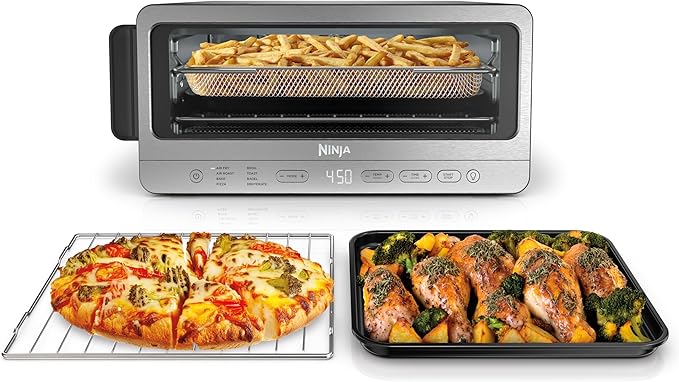
SP151 lists eight functions: air fry, roast, broil, bake, pizza, toast, bagel and dehydrate. That breadth is useful when several jobs matter. It does not establish the same ideal tray, temperature or timing for every food, so check the exact function and accessory guidance for the tasks on your list.
Measure the horizontal working position
The listed body is 17.01 inches deep, 15.75 wide and 7.68 high. Start with that rectangle, then add the manufacturer’s required clearance and space to open the door and handle a tray. Keep a suitable receiving area nearby.
The low body can be an advantage beneath an open work area, but height still matters inside the chamber. A twelve-inch pizza claim answers a horizontal food-size question. It does not prove that a tall casserole, handled pot or covered baking dish will clear the elements and rack arrangement.

Treat upright storage as a separate state
The flip-up design changes how much counter area is occupied between uses. It is a storage feature, not a cooking position. Read the exact cooling, cleaning and flipping instructions before planning to push it against a backsplash after a meal.
Trace the movement with the intended shelf or cupboards in mind. Leave room for the body to rotate and consider the cord route. The useful measurement is not simply whether it fits when fully upright; you need a comfortable transition from the working position to the permitted storage position too.
Check trays and portions together
The listing describes six slices of toast, a twelve-inch pizza and up to four pounds of ingredients. Those are different food-format claims rather than one universal capacity. Compare the pan or basket layout for the meal you actually prepare and follow the instructed load.
Leave room for handling rather than filling every visible gap. Do not assume that several stacked dishes will behave like one shallow tray. A long function list does not replace the food placement and accessory instructions that make an ordinary routine repeatable.
Choose storage convenience deliberately
A flip-up oven is most useful when you need its counter area for another activity between meals. If the appliance will remain horizontal permanently, compare the modes and chamber shape directly with conventional ovens rather than paying attention to storage marketing alone.
Ninja leads our shortlist for flexible everyday modes and a useful storage option at a middle selected price. Choose it when a broad, low cooking format suits the food and the movement route works. A more compact conventional oven may fit better if tall bakeware or a different tray layout is the main priority.
Your quick checklist
- Three repeat meals identified
- Horizontal clearance measured
- Tallest cookware checked
- Cooling and flip instructions read
- Rotation and cord route planned
Ninja Flip SP151 Toaster Oven & Air Fryer
See the original photos, listing demonstration, specifications and buying considerations in our product overview.
Explore this product ↗Check current details on Amazon ↗Good questions
Can it cook upright?
Use only the instructed cooking position.
Does pizza diameter describe vertical space?
No. Check cookware height and clearance separately.
Sources & editorial context
Featured product facts and photographs: the maker’s Amazon listing, as saved in the GOODFINDS catalog. Listings can change; verify the exact variant, instructions and current details.
Written by GOODFINDS Editorial.