
40 kPa, 500 W or a larger dust cup? How to read vacuum specifications
A bigger number can describe a different measurement, not a better result on your floor.
Compare like-for-like information. Put mode-specific runtime, tools and maintenance ahead of an unsupported cross-brand suction ranking.
Keep pressure and power in separate columns
The featured KARDV listing advertises five hundred watts and forty kilopascals. Those are different kinds of specifications: one is a power rating and the other is a pressure claim. Neither becomes a measured pickup comparison across the five vacuums in our shortlist. Avoid choosing a winner by sorting unlike headline numbers as though they came from the same practical test.
Start with the cleaning job instead. Hard-floor crumbs, hair on furniture and debris in a rug can need different tools and handling. Look at the floor head, attachments and use restrictions for the selected model. A specification is useful context when its meaning and conditions are clear, but it cannot describe every aspect of how a vacuum fits a home.
Read both ends of the runtime claim
The saved listing separates up to sixty minutes at the minimum setting from about twenty to twenty-five minutes in Max. That gap is important. If you expect to use the higher setting for much of the route, the longer headline does not describe that session. Keep the speed setting beside each number whenever you compare it with another model.
Plan a realistic route with attachment changes and areas that may need extra passes. Do not assume the largest advertised runtime means the largest home can be cleaned in one go. You need the appropriate tool, useful reach and a workable charging routine as well. Learn your normal session before deciding whether a second approved battery would actually solve a problem.

Decide what a larger dust cup improves
The KARDV listing gives a one-point-five-liter dust cup. That can matter when your normal cleanup produces a lot of bulky debris, but the usable fill limit and emptying instructions still apply. A larger cup is not permission to pack debris into the airflow path or wait until suction is obviously affected before checking the container.
Think about where you will empty it and how comfortably you can remove and refit the parts. Look at the original photographs and demonstration for the mechanism. Include brush and filter inspection in that routine. A convenient dust cup helps only if you are comfortable handling it, and a capacity number alone cannot tell you how tidy the emptying process will feel in your space.
Check the ownership details before the offer
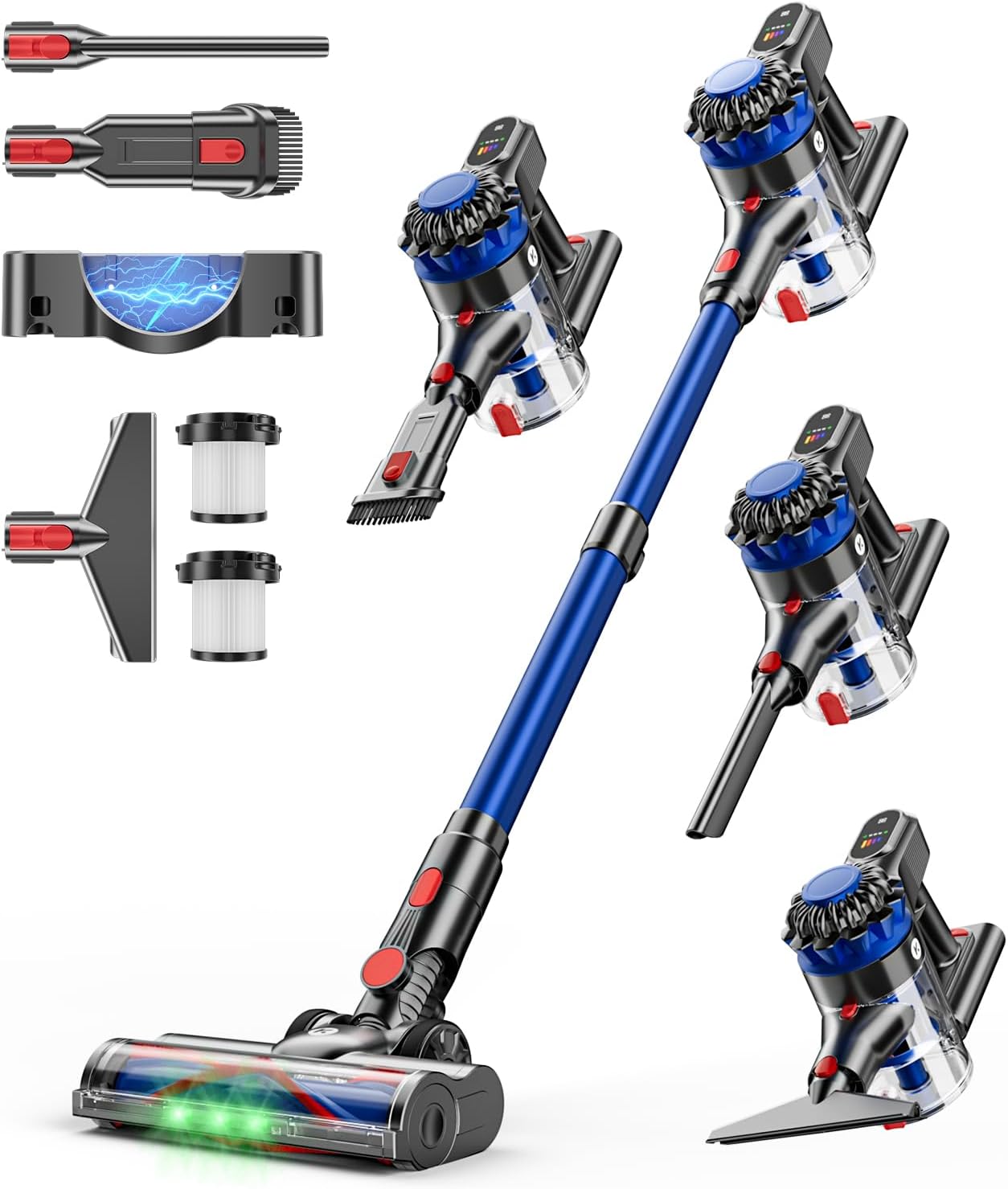
The model includes an illuminated head, display, removable battery and wall-mount charging arrangement in the saved listing. Consider where each feature helps: seeing debris, checking a setting or keeping a charge ready. Confirm that the mounting and charging instructions fit the spot you have available rather than planning around a photograph of someone else’s room.
Before choosing a value-focused vacuum, identify replacement filters, approved batteries and the current support route. The saved bundle lists several small tools and two HEPA filters; verify the exact included items and maintenance instructions. Choose the KARDV for the combination that fits your jobs, with its pressure and runtime claims kept in context instead of turned into a promise of superior pickup.
Your quick checklist
- Separate watts from pressure claims
- Compare minimum and Max runtime
- Check cup fill limits and emptying
- Identify approved replacement batteries and filters
- Measure a charging and storage spot
KARDV 500W Cordless Stick Vacuum
See the original photos, listing demonstration, specifications and buying considerations in our product overview.
Explore this product ↗Check current details on Amazon ↗Good questions
Does forty kPa prove it is the best cleaner?
No. It is not a shared cross-brand pickup result.
Is sixty minutes the Max setting figure?
No. The listing gives about twenty to twenty-five minutes for Max.
Sources & editorial context
Featured product facts and photographs: the maker’s Amazon listing, as saved in the GOODFINDS catalog. Listings can change; verify the exact variant, instructions and current details.
Written by GOODFINDS Editorial.


